

Check your battery type first
Before troubleshooting range issues, identify your GEM car’s powertrain. Flooded lead-acid batteries require water top-offs and equalization charges, while sealed AGM or lithium-ion systems need different care. Treating a lithium battery like a traditional lead-acid unit can damage cells or void the warranty.
Most older GEM cars use six 6-volt flooded lead-acid batteries in a 36-volt series. These deep-cycle units, common in marine and golf cart applications, need regular maintenance. Newer models or retrofits often use Absorbent Glass Mat (AGM) or Lithium Iron Phosphate (LiFePO4) batteries. AGM units are sealed and vibration-resistant. Lithium systems, often 12-volt modules in 72-volt configurations, offer faster charging and lighter weight. Verify your type by checking terminals or your owner’s manual.
| Battery Type | Maintenance | Weight | Avg Lifespan |
|---|---|---|---|
| Flooded Lead-Acid | Check water levels, equalize charges | Heavy | 2-4 years |
| AGM | Sealed, no water needed | Medium | 3-5 years |
| Lithium (LiFePO4) | Minimal, BMS managed | Light | 8-10 years |
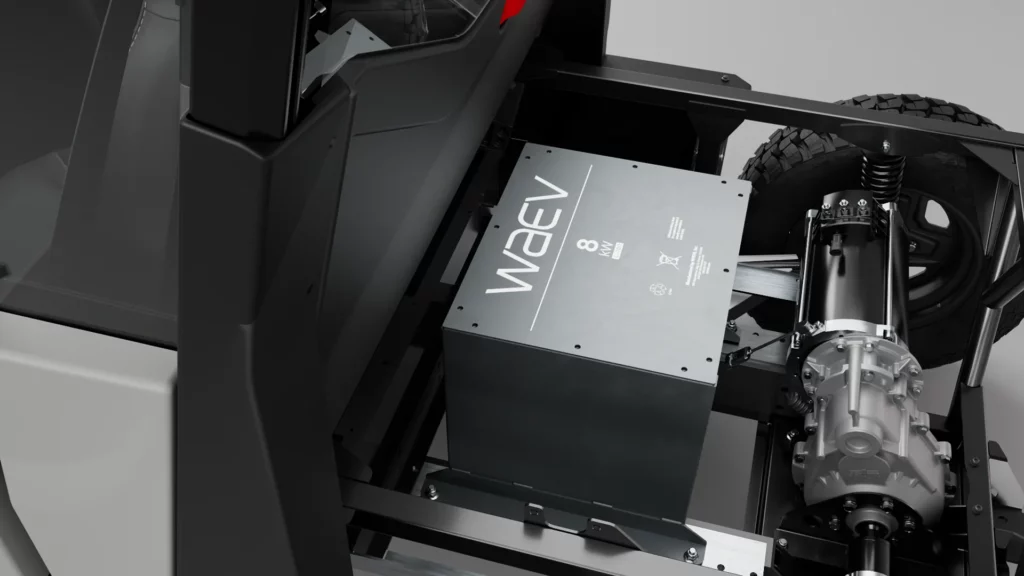
Identifying your battery type is the first step in extending its life. Flooded batteries need consistent charging and water top-offs to prevent plate exposure. AGM and lithium systems do not require water but need proper charging profiles to avoid overvoltage. If unsure, inspect the casing or contact a GEM dealer.
Charge your GEM car correctly
Proper charging is the most effective way to extend battery life. Avoid draining the battery completely before refilling; this accelerates degradation. Instead, treat the battery like a muscle that needs regular, moderate exercise.
Plug the charger into the GEM car’s charging port before connecting it to the wall outlet. This prevents electrical arcing and ensures the vehicle’s system is ready. Ensure the connection is secure and the port cover is closed.
Use a standard household 120-volt outlet. Avoid extension cords to prevent voltage drops and overheating. If necessary, use a heavy-duty, outdoor-rated cord of the shortest length required. Plug directly into the wall or a surge-protected power strip designed for high-draw appliances.
Check LED indicators on the charger and dashboard. A solid green light typically indicates a full charge, while amber or red lights show charging in progress or faults. Refer to your GEM model’s manual for exact light patterns, as they vary between lithium and lead-acid types.
Once the charger indicates a full charge, disconnect from the wall outlet first, then the vehicle. Leaving the battery on the charger after it is full generates unnecessary heat. Aim to unplug within a few hours of completion.
Avoid deep discharges
Never let the battery run completely dead. Lithium-ion and lead-acid batteries suffer structural damage when discharged below 20%. If the car won’t start, you have already shortened its lifespan. Recharge when the gauge hits the second bar from the bottom.
Use the right charger
Using a third-party charger with incorrect voltage or amperage can fry the battery management system. GEM recommends using only approved chargers matching your vehicle’s chemistry. For lithium models, use the dedicated lithium charger; lead-acid models require a standard smart charger. Check GEM Car’s official charger page for compatible models.
Maintain flooded batteries weekly
Older GEM models rely on flooded lead-acid batteries requiring regular physical maintenance. Unlike sealed units, these need specific attention to water levels and terminal integrity. Consistent weekly care prevents sulfation and corrosion.
Regular maintenance protects your investment. While sealed batteries offer convenience, flooded units like Trojan or Deka group 31 batteries are cost-effective if you commit to the weekly routine. For detailed specifications, refer to the GEM Car official documentation or the manufacturer's guide.
Store your GEM car for winter
Inactivity drains the battery faster than expected. Internal systems draw power, and cold temperatures reduce charge-holding capacity. Prevent deep discharge and permanent capacity loss by following this sequence before winter storage.
Watch for these warning signs
If your GEM car exhibits range issues or charging glitches, start with the least invasive restart and retest the exact feature that failed. If the display froze, confirm touch response, climate controls, navigation, audio, and phone pairing after the reboot. If the issue was connectivity, test Wi-Fi, cellular signal, Bluetooth, and the companion app separately so one weak connection does not look like a full system failure.
If the problem returns immediately, look for a pattern instead of repeating the same reset. Recent updates, low signal, a newly paired phone, a USB accessory, or a profile sync issue can all make the failure look random. Remove one variable at a time, then give the system a few minutes to reload before judging the result.
Escalate when the screen stays black, the same warning returns, basic controls are unavailable, or the reboot only works for a few minutes. At that point, the most useful thing you can provide is a short log: time, software version, exact symptom, what reset you tried, and whether the car or device was parked and awake.
The simplest way to use this section is to keep the setup small, verify each change, and record the stable configuration before adding optional accessories.
Common gem battery: what to check next
GEM owners often ask about the lifespan of their battery and what to expect when it finally needs replacing. Understanding these details helps you plan maintenance and budget for long-term ownership.
How long does a GEM battery last?
A well-maintained GEM battery typically lasts between 5 and 7 years. Lead-acid batteries, which come standard in most models, may need replacement sooner if they are frequently drained below 50%. Lithium upgrades can extend this lifespan significantly, often reaching 10 years or more with proper care.
What is the cost to replace a GEM battery?
Replacement costs vary by chemistry. A standard 48V lead-acid set usually runs between $300 and $500. Switching to a lithium battery costs more upfront, ranging from $800 to $1,200, but offers better longevity and weight savings. Always check GEM Car’s official parts page for current pricing and compatibility.
How often should I charge my GEM battery?
Charge your battery after every use to prevent sulfation, which damages lead-acid cells. If you do not use the vehicle for a long period, keep the battery connected to a maintainer or charge it once a month. Never store the battery completely depleted.
No comments yet. Be the first to share your thoughts!