

Understanding EV Battery Fundamentals and Optimal Charging Practices
Electric vehicle battery maintenance has become increasingly critical as more drivers transition to EVs in 2024. Your electric vehicle's battery represents the most expensive component of your car, typically accounting for 30-40% of the total vehicle cost. Understanding proper EV battery maintenance techniques can significantly impact your electric vehicle battery life, potentially extending it from the standard 8-10 years to well beyond a decade.
Modern EV batteries utilize lithium-ion technology, which differs fundamentally from traditional lead-acid car batteries. These sophisticated energy storage systems require specific care protocols to maintain their capacity and performance over time. The key to successful battery life extension lies in understanding how charging cycles, temperature exposure, and usage patterns affect the chemical processes within your battery cells.
The Science Behind Battery Degradation
Battery degradation occurs through two primary mechanisms: calendar aging and cycle aging. Calendar aging happens naturally over time, regardless of usage, while cycle aging results from charging and discharging activities. Research shows that proper charging habits can reduce cycle aging by up to 40%, making EV battery tips essential knowledge for every electric vehicle owner.
Lithium-ion batteries experience stress when charged to 100% capacity or discharged below 20%. At these extreme charge levels, the battery's internal chemistry becomes unstable, leading to accelerated wear of the electrode materials. This is why maintaining optimal charge levels represents the most crucial aspect of electric car battery care.
Battery Degradation Rates: 20-80% vs 0-100% Charging Patterns Over Time
The optimal charging range of 20-80% isn't arbitrary—it's based on extensive research into lithium-ion chemistry. When batteries are charged above 80%, the voltage increases rapidly, creating stress on the cathode material. Similarly, discharging below 20% forces the battery management system to work harder to extract remaining energy, potentially damaging the anode structure.
Implementing the 20-80 Rule
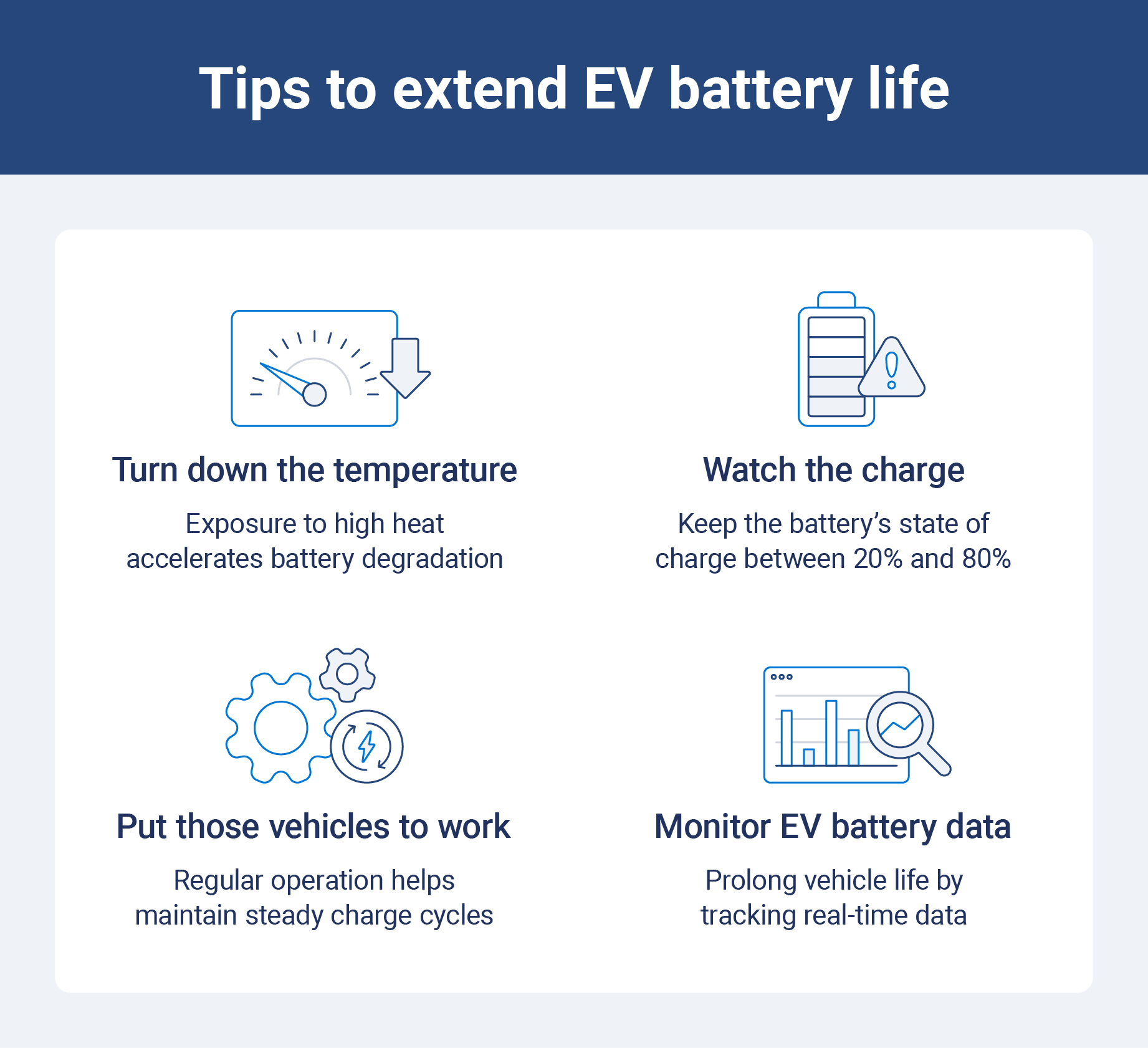
The 20-80 charging rule forms the foundation of effective EV battery maintenance. This practice involves keeping your battery charge between these percentages for daily driving needs, reserving full charges for longer trips. Most modern EVs include settings to automatically limit charging to 80%, making this practice convenient for everyday use.
For daily commuting, calculate your actual energy needs and adjust accordingly. If your daily driving requires only 30-40% of your battery capacity, you can comfortably operate within the 20-80% range without range anxiety. This approach can extend your battery's useful life by 20-30% compared to regular full charging cycles.
However, it's important to note that occasional full charges aren't harmful and may actually benefit your battery management system's calibration. Plan to charge to 100% once every few weeks, particularly before long trips, to help the battery management system accurately track capacity and maintain proper cell balancing.
Smart Charging Strategies
Beyond the 20-80 rule, implementing smart charging strategies can further enhance your EV battery maintenance routine. Time your charging sessions to avoid extreme temperatures—batteries charge most efficiently and safely when temperatures are moderate, typically between 60-80°F (15-27°C).
Many EVs offer scheduled charging features that allow you to set charging times during off-peak hours when electricity rates are lower and ambient temperatures are more moderate. This dual benefit of cost savings and battery health makes scheduled charging an excellent practice for extending electric vehicle battery life.
Pre-conditioning your battery while still connected to the charger can also reduce stress on the battery pack. This feature warms or cools the battery to optimal temperature before driving, using grid power instead of battery power for climate control.
Understanding these fundamental principles of EV battery maintenance sets the stage for implementing more advanced care techniques. In the following sections, we'll explore how temperature management, fast charging limitations, and driving habits can further optimize your electric vehicle battery life, ensuring you get maximum value from your EV investment.
Temperature Management and Environmental Factors
Temperature control represents one of the most critical aspects of EV battery maintenance. Lithium-ion batteries in electric vehicles operate optimally within a narrow temperature range of 68-78°F (20-25°C). Extreme temperatures, both hot and cold, can significantly impact your electric vehicle battery life and overall performance.
Heat Management Strategies
Excessive heat poses the greatest threat to battery longevity. When temperatures exceed 95°F (35°C), chemical reactions within the battery cells accelerate, leading to faster degradation. During summer months, implement these battery life extension practices:
- Park in shaded areas whenever possible to reduce cabin and battery temperature
- Use window tinting or sunshades to minimize heat absorption
- Precondition your vehicle while plugged in to reduce battery strain during initial cooling
- Avoid leaving your EV in direct sunlight for extended periods
EV Battery Capacity Loss Over Time by Operating Temperature
Your vehicle's thermal management system works continuously to maintain optimal battery temperature, but you can support this process through smart parking and charging decisions. When possible, charge during cooler parts of the day, such as early morning or evening hours.
Cold Weather Considerations
Cold temperatures present different challenges for electric car battery care. When temperatures drop below 32°F (0°C), battery capacity temporarily decreases, and charging efficiency drops significantly. Winter EV battery tips include:
Preconditioning becomes essential during cold months. This process warms the battery to optimal temperature while your vehicle remains plugged in, preserving range and reducing stress on the battery cells. Most modern EVs offer scheduled preconditioning through mobile apps, allowing you to prepare your vehicle before departure.
Cold weather can reduce your EV's range by 20-40%, but this reduction is largely temporary. As the battery warms during driving, performance gradually improves. However, repeated exposure to extreme cold without proper preconditioning can contribute to long-term degradation.
Smart Charging Habits and Timing
Developing intelligent charging routines significantly impacts your electric vehicle battery life. Beyond maintaining optimal charge levels, the timing and method of charging play crucial roles in battery health preservation.
Charging Schedule Optimization
Consistent charging patterns help maintain battery chemistry stability. Rather than waiting for your battery to reach critically low levels, establish a routine charging schedule. Many EV owners find success with daily charging to 60-70% for regular commuting, reserving higher charge levels for longer trips.
Time-of-use electricity rates often make overnight charging more economical, and cooler nighttime temperatures benefit battery health. However, avoid leaving your vehicle at 100% charge for extended periods. If you must charge to full capacity for a long trip, begin your journey soon after charging completes.
Level 2 vs. DC Fast Charging Balance
While DC fast charging offers convenience, frequent use can accelerate battery degradation due to high current flow and heat generation. Research indicates that vehicles primarily charged using Level 2 chargers maintain better battery health over time compared to those regularly using fast charging.
For optimal EV battery maintenance, follow the 80/20 rule for charging methods: use Level 2 charging for 80% of your charging needs, reserving DC fast charging for the remaining 20% when rapid charging is essential. This approach balances convenience with battery longevity.
Monitoring and Maintenance Tools
Modern electric vehicles provide sophisticated battery monitoring systems that help track health and performance metrics. Understanding these tools enables proactive EV battery tips implementation and early detection of potential issues.
Most EVs display battery health percentages, charging efficiency ratings, and temperature data through dashboard displays or mobile applications. Regular monitoring of these metrics helps identify patterns that may indicate developing problems.
Third-party applications and OBD-II scanners designed for electric vehicles can provide additional insights into battery performance, cell voltage variations, and charging patterns. These tools prove particularly valuable for older EVs or vehicles approaching warranty expiration.
Document your charging habits, range observations, and any performance changes in a maintenance log. This information becomes invaluable when consulting with service technicians or when making warranty claims related to battery performance degradation.
Advanced Monitoring and Long-Term EV Battery Care Strategies
Implementing comprehensive monitoring practices and long-term care strategies forms the foundation of effective EV battery maintenance. Modern electric vehicles provide sophisticated battery management systems that offer valuable insights into your battery's health and performance metrics.
Real-Time Battery Health Monitoring
Your electric vehicle's onboard diagnostics continuously track critical battery parameters including state of charge, temperature fluctuations, and capacity degradation. Most 2024 EV models display this information through the infotainment system or dedicated mobile applications. Regular monitoring of these metrics allows you to identify potential issues before they impact your electric vehicle battery life significantly.
Professional battery diagnostics should be performed annually or every 15,000 miles, whichever comes first. These comprehensive assessments evaluate cell balance, internal resistance, and overall capacity retention. Early detection of irregularities enables preventive measures that can extend battery life by 15-25% according to recent automotive research.
Software Updates and Battery Optimization
Manufacturers regularly release over-the-air updates that enhance battery management algorithms and charging protocols. These updates often include improvements to thermal management, charging curve optimization, and cell balancing procedures. Ensuring your EV receives these updates promptly contributes significantly to battery life extension.
Many electric vehicle manufacturers have introduced adaptive learning systems that adjust charging patterns based on your driving habits and environmental conditions. These intelligent systems optimize charging schedules to minimize stress on battery cells while maintaining convenience for daily use.
Driving Habits That Preserve Battery Health
Your driving style directly impacts electric car battery care and longevity. Aggressive acceleration and hard braking create additional stress on the battery system, generating excess heat and reducing overall efficiency. Smooth, gradual acceleration and strategic use of regenerative braking help maintain optimal battery temperatures while maximizing energy recovery.
Highway driving at consistent speeds typically proves less demanding on the battery than stop-and-go city traffic. However, maintaining speeds above 75 mph significantly increases energy consumption and heat generation. Planning routes that balance efficiency with battery preservation helps optimize your electric vehicle's performance.
Seasonal Maintenance Protocols
Different seasons require adjusted EV battery tips and maintenance approaches. Winter conditions demand preconditioning strategies to warm the battery before departure, while summer heat requires enhanced cooling system maintenance and strategic parking decisions.
During winter months, keeping your EV plugged in when parked allows the battery management system to maintain optimal temperatures without depleting stored energy. This practice proves particularly important in regions where temperatures regularly drop below freezing.
Professional Service and Warranty Considerations
Regular professional maintenance ensures your battery warranty remains valid while identifying potential issues early. Most EV manufacturers recommend annual battery health assessments performed by certified technicians who can access detailed diagnostic data unavailable to consumers.
Understanding your battery warranty terms helps you make informed decisions about maintenance investments. Many warranties cover battery capacity degradation beyond specific thresholds, typically 70-80% of original capacity within the warranty period.
Future-Proofing Your Investment
As battery technology continues evolving, staying informed about emerging maintenance techniques and technologies helps maximize your investment. Some manufacturers now offer battery upgrade programs that allow older EVs to benefit from newer battery technologies and management systems.
Implementing these comprehensive EV battery maintenance strategies ensures optimal performance while maximizing the return on your electric vehicle investment. Consistent application of these practices, combined with regular professional assessments, can extend battery life well beyond manufacturer estimates.
No comments yet. Be the first to share your thoughts!