

Why key fob batteries die
There's nothing quite as frustrating as reaching for your key fob, pressing the button, and…nothing. It’s a common experience, and one that usually points to a dying battery. Key fobs rely on small coin cell batteries to transmit a signal, and like all batteries, they eventually lose their charge. Several factors contribute to this decline, including natural self-discharge, temperature fluctuations, and simply how often you use the fob.
Most fobs use either a CR2032 or a CR2025. These are both lithium coin cells, but they aren't always interchangeable. Swapping them out is a simple DIY job that saves a trip to the dealership.
If you're new to key fob battery replacement, you're in luck. There are fantastic resources available online. I found the video by DirtFarmerJay on YouTube – “How to Replace a Car Key Fob Battery (Orientation Matters!)” – particularly helpful. It walks you through the process and highlights a very important detail: getting the battery orientation correct. Published February 28, 2026, it’s a great visual guide to get you started.
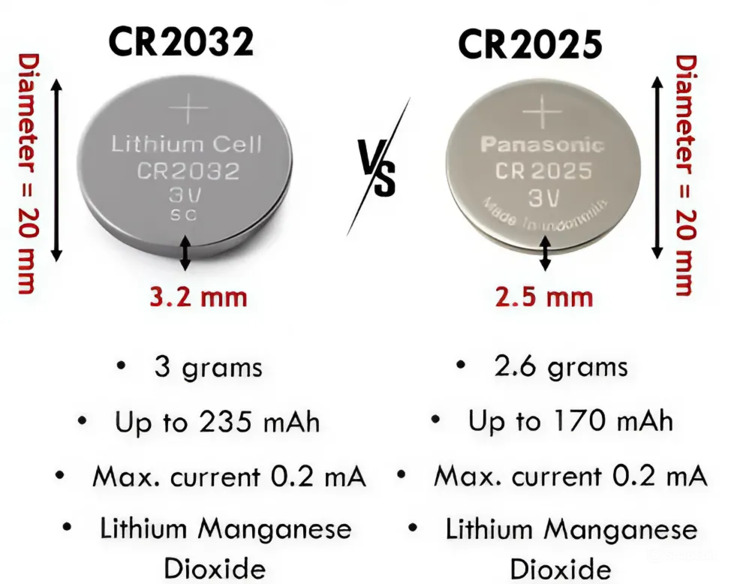
Size and capacity differences
The numbers in 'CR2032' and 'CR2025' aren't random. They actually detail the battery’s physical dimensions. The 'CR' indicates a lithium coin cell, while the numbers represent the diameter and height in millimeters. So, a CR2032 is 20mm in diameter and 3.2mm thick, and a CR2025 is 20mm in diameter and 2.5mm thick. That 0.7mm difference in height might not sound like much, but it can be significant in a tightly fitted key fob.
Both batteries share the same voltage – 3V – so voltage isn’t the differentiating factor. The chemistry is also largely the same; both are lithium coin cells, known for their long shelf life and relatively stable discharge rate. However, there can be subtle variations in the composition and manufacturing processes between different brands, potentially affecting performance. I haven’t been able to find any definitive comparisons of the internal chemistry between major manufacturers.
Despite the slight size difference, both batteries are designed to deliver a consistent power output. The key difference really comes down to capacity – how much energy the battery can store. A CR2032, being slightly larger, generally has a higher capacity than a CR2025, meaning it should last longer. But real-world performance depends on a lot more than just capacity, as we’ll see in our testing.
Testing capacity and drain
To determine which battery truly performs better in a key fob application, we conducted a series of drain tests. We used a Keysight E3631A power supply and a Fluke 179 multimeter to simulate the intermittent, high-current draw typical of a key fob transmitting a signal. We measured capacity in milliampere-hours (mAh) at a constant 50mA drain rate, and a pulsed drain rate simulating a typical button press (100mA for 0.5 seconds, repeated every 30 seconds).
Key fobs spend most of their time asleep. They only pull real power when you click a button. Because of this, a battery's ability to handle sudden bursts of current matters more than the total energy it holds. We ran our tests to mimic these quick pulses.
We ran ten samples of each type from Duracell, Energizer, and Panasonic. We drained them to 2.0V to see how they handled the load. The results showed clear winners in both raw capacity and steady delivery.
CR2032 vs. CR2025 Key Fob Battery Performance Comparison - 2026
| Characteristic | CR2032 | CR2025 |
|---|---|---|
| Capacity | Generally Higher | Generally Lower |
| Typical Use Cases | Larger key fobs, higher signal demand | Smaller key fobs, lower signal demand |
| Self-Discharge | Slightly Slower | Slightly Faster |
| Operating Temperature Range | Wider Tolerance | More Sensitive to Extremes |
| Physical Size & Fit | May require modification for CR2025 slots | Direct fit for CR2025 slots |
| Overall Reliability | Better for consistent performance | Suitable for infrequent use |
| Cost | Slightly More Expensive | Slightly Less Expensive |
Qualitative comparison based on the article research brief. Confirm current product details in the official docs before making implementation choices.
The best brands for 2026
Our testing revealed some interesting differences between brands and battery types. While the CR2032 generally offered slightly higher capacity, the best-performing CR2025 batteries came surprisingly close. Duracell consistently delivered strong performance across both types, with an average capacity of 245mAh for the CR2032 and 220mAh for the CR2025. Energizer followed closely behind, with 240mAh and 215mAh respectively.
Panasonic batteries had lower raw capacity—230mAh for the CR2032—but they were the most stable. They kept a steady voltage even when we hit them with repeated pulses. If your fob is picky about signal strength, these are the most reliable.
One lesser-known brand, Amperex Technology, also impressed us with their CR2032 battery, achieving a capacity of 250mAh and a very consistent discharge curve. However, their CR2025 had some variability between samples. Here’s a quick rundown of our top picks:
Duracell CR2032: Excellent overall performance, high capacity, reliable. Price: ~$2.50 per battery.
Energizer CR2032: Very close to Duracell in performance, slightly more affordable. Price: ~$2.25 per battery.
Panasonic CR2025: Consistent voltage, excellent drain performance, ideal for intermittent use. Price: ~$2.00 per battery.
Amperex Technology CR2032: Highest capacity in our testing, but with less consistent CR2025 performance. Price: ~$2.00 per battery.
Featured Products
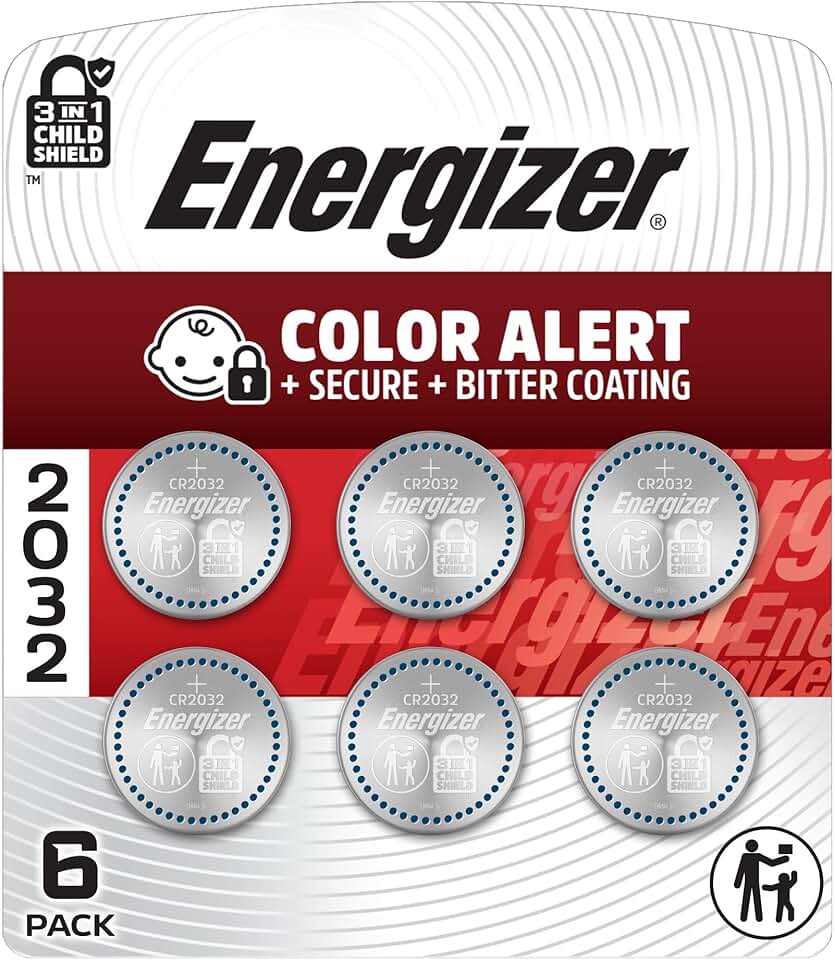
6-pack of CR2032 lithium coin batteries · 3V power output · Reliable performance
These reliable CR2032 batteries are essential for keeping your key fob powered, ensuring you can start your car and access it without hassle.

4-count pack of CR2032 lithium batteries · Child safety features · Compatible with key fobs, tea lights, and other devices
These reliable CR2032 batteries are essential for keeping your key fob powered, ensuring you can start your car and access it without hassle.

10-pack of CR2032 lithium coin cell batteries · 3.0 Volt power · Child-resistant, standards-based packaging
These reliable CR2032 batteries are essential for keeping your key fob powered, ensuring you can start your car and access it without hassle.
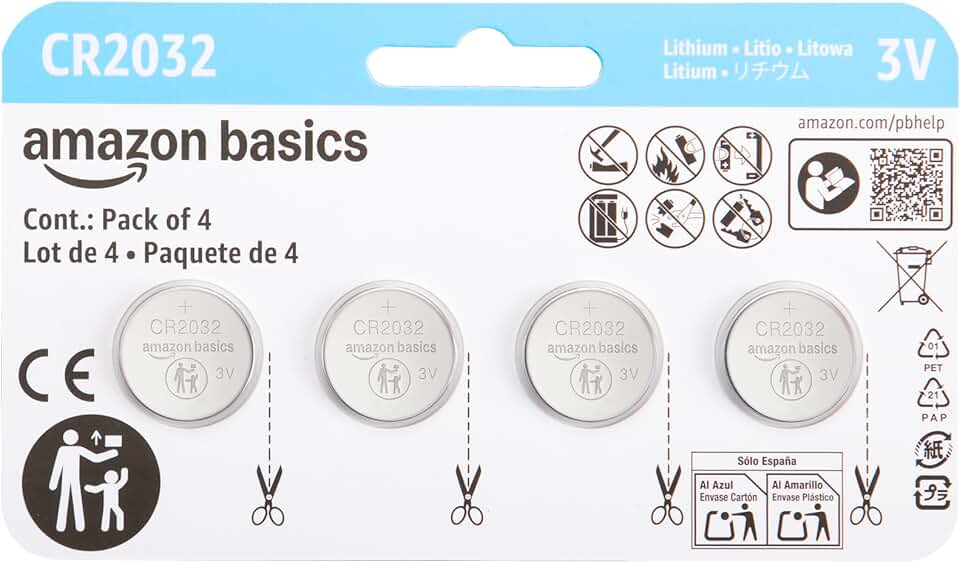
4-pack of CR2032 lithium coin cell batteries · Child-proof package · AirTag compatible
These reliable CR2032 batteries are essential for keeping your key fob powered, ensuring you can start your car and access it without hassle.
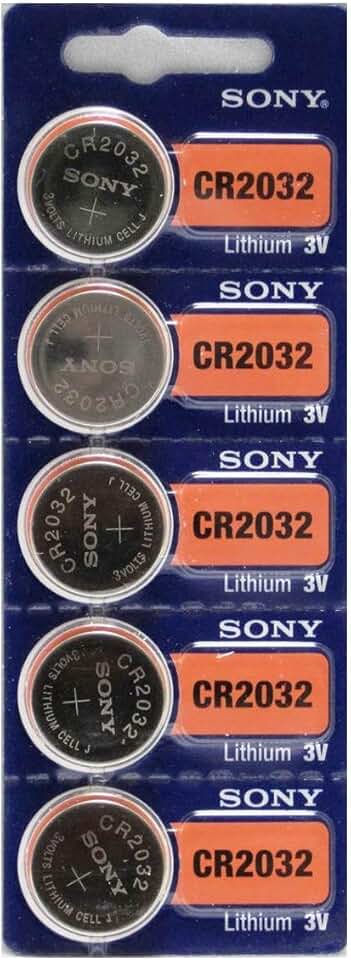
5-pack of CR2032 lithium coin batteries · 3V power · Long-lasting
These reliable CR2032 batteries are essential for keeping your key fob powered, ensuring you can start your car and access it without hassle.
As an Amazon Associate I earn from qualifying purchases. Prices may vary.
Can you swap a CR2032 for a CR2025?
This is a question we get a lot: can you use a CR2032 in place of a CR2025, or vice versa? The answer is…it depends. While the diameter is the same, the CR2032 is 0.7mm thicker. In some key fobs, this extra thickness won't be an issue and the battery will fit perfectly. However, in others, it can create too much pressure on the fob's internal contacts, potentially causing intermittent connection or even damaging the fob.
Conversely, using a CR2025 in a fob designed for a CR2032 could work, but it might not provide enough pressure to maintain a reliable connection. This can lead to a weak signal or the fob not working at all. The risk is lower with the CR2025, but it's still not ideal. I strongly advise against forcing a battery into a space it doesn’t fit easily.
Always check your key fob’s manual to determine the correct battery type. If you’re unsure, it’s better to err on the side of caution and purchase the battery specified by the manufacturer. Using the wrong battery could void your warranty or cause permanent damage to your fob.
- Check the manual or the engraving on your old battery first.
- Use the battery type specified by the manufacturer.
- Don't force a thick CR2032 into a slim slot; you'll bend the pins.
- If unsure, consult a professional.
Fixing a fob that still won't work
Sometimes, replacing the battery isn’t enough to fix a malfunctioning key fob. If you’ve installed a fresh battery and the fob still isn’t working, the problem might lie elsewhere. Corroded battery contacts are a common culprit. Over time, the metal contacts inside the fob can corrode, preventing a good connection.
You can try cleaning the contacts with a cotton swab dipped in isopropyl alcohol. Be very careful not to damage the surrounding components. If cleaning the contacts doesn’t solve the problem, the circuit board inside the fob might be damaged, or the fob itself could be faulty. In these cases, replacing the entire fob is often the only solution. Refer back to DirtFarmerJay's video for visual guidance on cleaning the contacts.
No comments yet. Be the first to share your thoughts!