

Solid-state: beyond lithium-ion
Lithium-ion batteries have powered a revolution in portable electronics and, increasingly, electric vehicles. But they aren’t perfect. Concerns around safety – specifically, the flammability of the liquid electrolyte – and limitations in energy density are pushing researchers and companies to explore alternatives. Solid-state batteries represent a potentially significant leap forward in battery technology, offering a path to address these shortcomings.
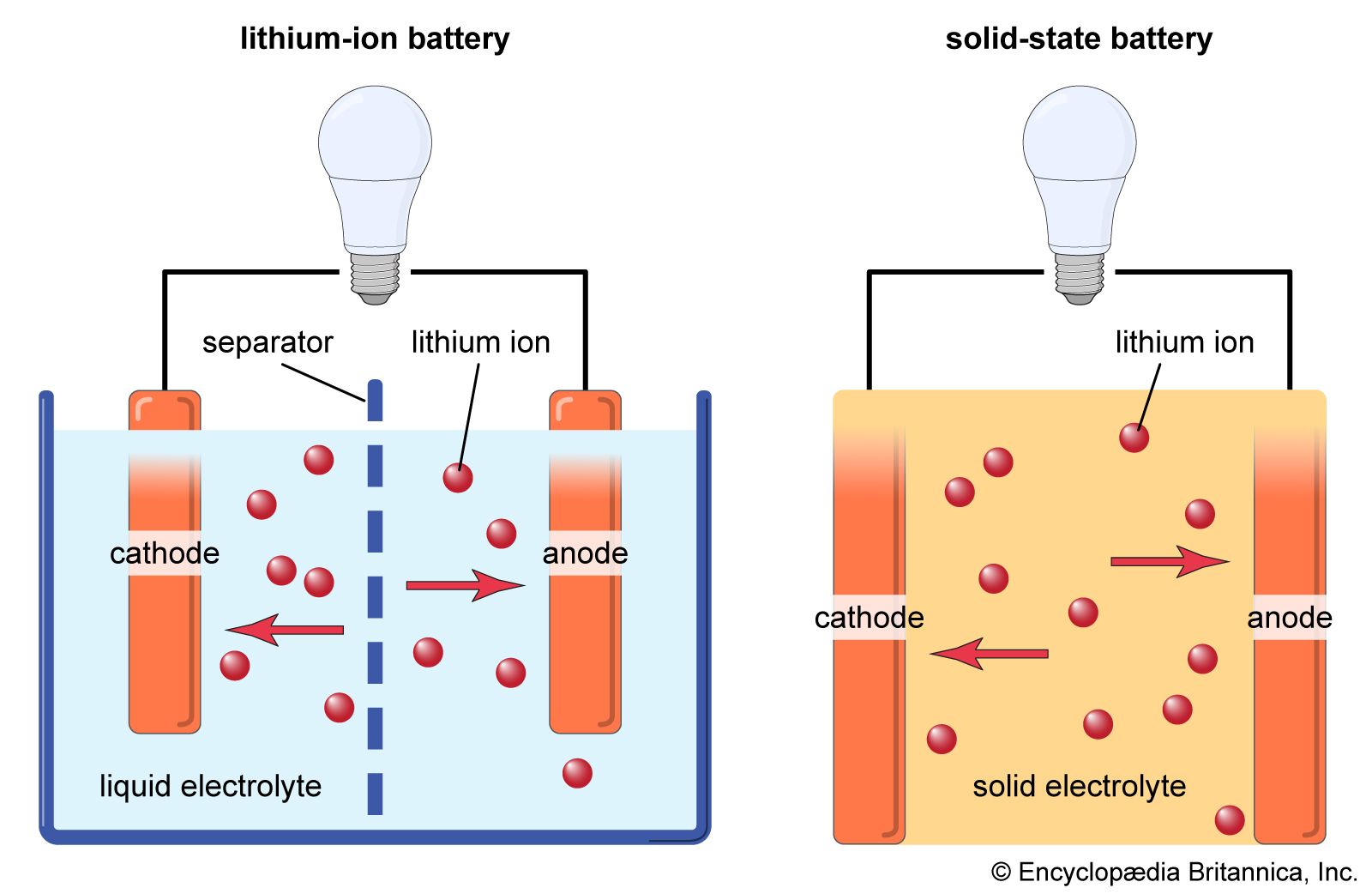
The core difference is straightforward: solid-state batteries replace the liquid or gel electrolyte found in traditional lithium-ion batteries with a solid material. This isn’t just a cosmetic change; it fundamentally alters how the battery operates and impacts its performance characteristics. It’s a change that promises better energy density, improved safety, and potentially longer lifespans.
Research into solid-state tech isn't new, but 2026 is the year we might actually see it in the wild. It won't be in every sedan immediately; expect niche applications first. I'm skeptical of a total mass-market takeover by then, but the timeline is finally moving from 'someday' to a specific calendar year.
The electrolyte problem
The liquid electrolyte in conventional lithium-ion batteries is essential for ion transport between the anode and cathode, enabling the flow of electricity. However, it's also the source of many of the battery’s biggest problems. Flammability is a major concern, and there have been documented incidents – like the Boeing 787 Dreamliner battery fires in 2013 – that highlight the risks. These fires, while relatively rare, sparked significant investigation and concern about the safety of lithium-ion technology.
Beyond flammability, liquid electrolytes can be prone to leakage, especially as batteries age and undergo repeated charge-discharge cycles. This leakage can corrode battery components and, in extreme cases, lead to thermal runaway – a self-heating process that can result in fire or explosion. Another critical issue is the formation of dendrites. These are metallic lithium structures that grow from the anode towards the cathode, eventually causing a short circuit and battery failure.
Solid electrolytes aim to solve these problems. By replacing the liquid, they eliminate the risk of leakage and significantly reduce flammability. They also suppress dendrite formation, leading to a more stable and longer-lasting battery. But not all solid electrolytes are created equal. Researchers are exploring several different types, each with its own advantages and disadvantages.
Polymer electrolytes are flexible and easy to make but don't move ions very well. Ceramics are the opposite—great conductivity, but they're brittle and a nightmare to process. Sulfides are the current favorite because they're pliable and fast, though they hate moisture. Oxides are the cheap, stable middle ground, even if they're slower than the top-tier materials.
The main contenders
Toyota is arguably the most visible player in the solid-state battery race. They’ve been investing heavily in the technology for over a decade and have consistently stated their intention to introduce a vehicle with a solid-state battery by 2027. Their approach focuses on a solid electrolyte material that they believe can deliver significant improvements in range and safety. They’ve shown prototype cells, but details remain limited.
QuantumScape, a US-based company, is taking a different approach, focusing on a solid electrolyte that forms a metallic lithium anode. They’ve partnered with Volkswagen and have demonstrated promising results in testing, but scaling up production remains a challenge. In late 2023, they produced a 10-layer prototype cell, marking a step toward commercialization, and are aiming for automotive qualification by 2024, though widespread availability is still several years out.
Solid Power is another key player, also backed by Ford and BMW. They’re developing sulfide-based solid-state batteries and have been building a pilot production line in Colorado. They've reported successful testing of larger-format cells, but, like QuantumScape, face hurdles in scaling production and reducing costs. They are targeting automotive applications starting in the latter half of the decade.
Factorial Energy is utilizing a solid electrolyte that's designed to integrate into existing lithium-ion battery manufacturing processes. This could potentially lower the barrier to entry for adoption. They’ve secured partnerships with Mercedes-Benz and Stellantis and are focusing on developing batteries for electric vehicles and other applications. Several other companies, including ProLogium and Ilika, are also actively involved in solid-state battery development, each pursuing unique material compositions and manufacturing techniques. It’s a very dynamic field.
What the performance boost actually looks like
Solid-state batteries promise several key performance improvements over their lithium-ion counterparts. Increased energy density is perhaps the most significant benefit. This means more energy can be stored in the same volume or weight, translating to longer ranges for electric vehicles. Estimates vary, but solid-state batteries could potentially offer a 30-50% increase in energy density compared to current lithium-ion technology.
Faster charging times are another potential advantage. The improved ionic conductivity of some solid electrolytes could allow for significantly quicker charging, potentially reducing charging times to under 15 minutes for a full charge. Improved safety is a major selling point, as the non-flammable nature of solid electrolytes eliminates the risk of thermal runaway and fire. Finally, solid-state batteries are expected to have a longer lifespan due to the suppression of dendrite formation and reduced degradation.
Thermal stability is particularly noteworthy. In crash scenarios or extreme temperatures, solid-state batteries are expected to be far more stable than lithium-ion batteries, reducing the risk of fire or explosion. While precise figures depend on the specific electrolyte material and cell design, the inherent stability of solid electrolytes offers a substantial safety advantage.
Lithium-Ion vs. Solid-State Batteries: A Comparative Overview (Projected for 2026)
| Characteristic | Lithium-Ion (2026 Projection) | Solid-State (2026 Projection) |
|---|---|---|
| Energy Density | Good, continuing incremental improvements | Significantly Better – Potential for substantially higher energy storage in the same volume. |
| Charging Speed | Fast charging capabilities are mature, but improvements are incremental | Better – Expected to enable much faster charging times due to improved ion conductivity. |
| Safety | Flammability risk exists due to liquid electrolyte; safety features are continually refined | Significantly Better – Non-flammable electrolyte drastically reduces fire risk. |
| Lifespan | Degradation over time is a key limitation; lifespan varies with usage | Better – Projected to offer longer cycle life and reduced degradation. |
| Cost | Relatively mature and cost-competitive technology | Higher – Currently more expensive to manufacture, but costs are expected to decline. |
| Temperature Sensitivity | Performance degrades at extreme temperatures | Better – More stable performance across a wider temperature range. |
| Weight | Moderate weight | Potentially Lower – Solid-state design may allow for lighter battery packs. |
| Scalability | Well-established manufacturing processes | Manufacturing scalability is still a challenge. |
Qualitative comparison based on the article research brief. Confirm current product details in the official docs before making implementation choices.
Why EVs get them first
The electric vehicle market is poised to be the first major beneficiary of solid-state battery technology. The increased range and faster charging times offered by solid-state batteries could address two of the biggest barriers to EV adoption: range anxiety and charging infrastructure limitations. A vehicle equipped with a solid-state battery could potentially travel 500 miles or more on a single charge, making long-distance travel more practical.
The impact won't be uniform across all vehicle segments. Higher-end sedans and SUVs are likely to be the first to adopt solid-state batteries, as the higher cost can be absorbed by the vehicle price. Trucks and more affordable vehicles will likely follow as production costs come down. The need for extensive charging infrastructure upgrades might be lessened as faster charging capabilities become standard.
Beyond cars, solid-state batteries could also find applications in other areas. Drones, for example, could benefit from increased flight times and improved safety. Portable electronics, such as smartphones and laptops, could become smaller, lighter, and more powerful. The potential applications are vast.
The price of progress
Despite the promising potential, significant challenges remain before solid-state batteries can become mainstream. Currently, they are considerably more expensive to manufacture than lithium-ion batteries. The materials used in solid electrolytes, particularly some of the ceramic and sulfide-based materials, are costly and difficult to process.
Scaling up production to meet the anticipated demand will require substantial investment in new manufacturing facilities and processes. Existing lithium-ion battery manufacturing infrastructure is not directly compatible with solid-state battery production. Materials sourcing is another potential bottleneck. Securing a reliable supply of the raw materials needed for solid electrolytes will be crucial.
Reducing the cost of solid-state batteries will require breakthroughs in materials science, manufacturing techniques, and supply chain management. It’s a complex problem with no easy solutions, and it’s likely to take several years to overcome these hurdles. The industry is actively working on these challenges, but widespread adoption will depend on achieving significant cost reductions.
Essential Gear for the Future of Battery Technology

Tests Alkaline, Lithium, Lithium-ion, and NiMH batteries · Provides clear digital readouts · Compact and easy to use
This tester offers immediate utility for understanding the health of various common battery types, providing insight into battery performance.

Charges 6V and 12V lead-acid and lithium batteries · Automatic maintenance and trickle charging · Desulfation and overcharge protection
This smart charger demonstrates advanced battery management capabilities, ensuring optimal performance and longevity for lead-acid and lithium chemistries.

1070Wh LiFePO4 battery capacity · 1500W AC output and 100W USB-C · 1-hour fast charging capability
This portable power station showcases the capabilities of LiFePO4 battery technology for reliable off-grid and emergency power solutions.

1024Wh LiFePO4 battery capacity · 1800W continuous output (3600W surge) · 1.5-hour fast charging
This portable power station highlights the high energy density and rapid charging potential of LiFePO4 batteries for home backup and outdoor adventures.
As an Amazon Associate I earn from qualifying purchases. Prices may vary.


No comments yet. Be the first to share your thoughts!